1/30/13

Master Alexandris Taekwon-do ITF 8 dan, Ground Kicks


There are a selection of kicks that can be used from the ground. . Many of the kicking techniques can be added to rolls and breakfalls... for the situation of going down and having to defend yourself when you don't have the opportunity to get back to your feet for whatever reason. Master Alexandris Taekwon-do ITF 8 dan, shows few of them


12/16/12

Why do we Kiap?

from http://www.kidokwan.org/articles/why/why-do-we-kiap-%EA%B8%B0%ED%95%A9%E6%B0%A3%E5%90%88/

Why do we Kiap?

Why do we kiap? Kiaps are nothing new to Korean or Japanese martial arts. In Japanese it is called Kiai (??). The reasons behind Kiaps varies from organization, styles and even schools. There are many ways or sounds of the Kiap/Kiai. They range from a ‘grunt to a
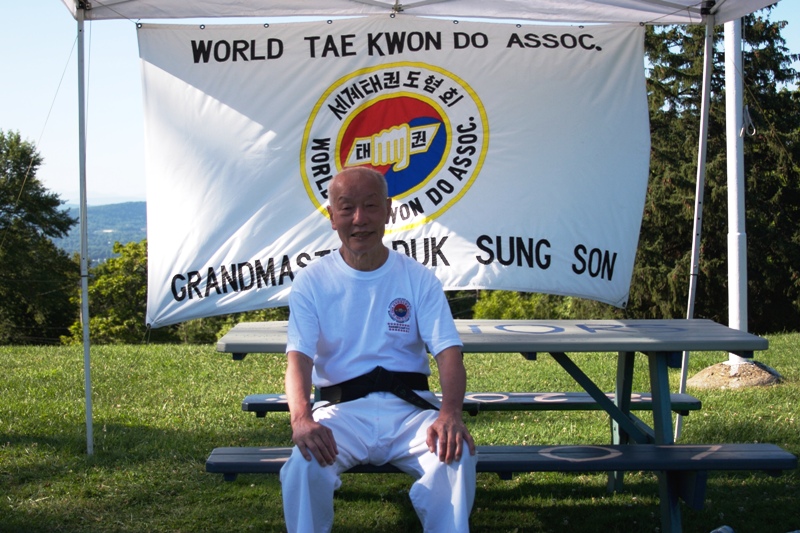
Grand Master Duk Sung Son
loud yell or other sounds and some even yell “kiai” etc. Grandmaster Son, Duk-sung of the World Taekwondo Association/ChungDo Kwan was known for shouting “utz” and promoted it in his publications.
Of course, the Korean concept comes directly from the Japanese influences as Japan had a huge influence in the development of modern Korean martial as from Taekwon-Do (???/??? ) and Hapkido (???/???) and is used exstevicely in Kumdo/Kendo (?? ??) too . A Kiap/Kiai is essentially a “war cry” and every society and military has different versions of it. We have seen it in all sorts of movies from Mel Gibson’s “Braveheart” and “We were Soldiers” to movies like the “Last Samurai” and “TaeKukk Ki.”
Korean Karate Cover, Grandmaster Son
It is a pretty known fact that with proper timing the actual act of a Kiap at the time of the execution of the techniques, it helps generate power. Partly because of the physics involved.
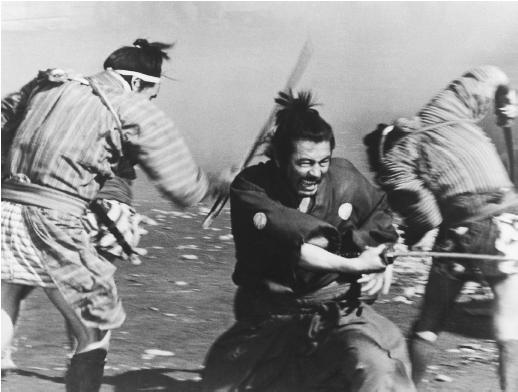
Yojimbo Movie
Yojimbo Movie
The two terms “kiap” and “kiai” are the same as “Hapki” (hapkido) and “Aiki” (Aikido) but transposed. The terms basically mean “coordination spirit/united spirit”. Some styles and organizations promote it more as a meta-physical aspect of martial arts, but others more as a practical application at the time of the execution of techniques. Try any technique on a target. The first one take a breath and hold it and execute your technique (doesn’t really matter what technique you use) and then use the exact same technique but this time do a kiap/kiai at the time of the technique you will clearly feel and see the difference.
(As a side note:  The I.T.F. have never any kiap used in them.   General Choi never wanted then incorporated, it was only I.T.F. instructors, from the older Kwans that put them in.  E.G. GM Jhoon Rhee, GM Cho, Hee-il etc.  Only in the last couple of years has the I.T.F. under Choi, Jung-hwa put them in the tuls/patterns.)

11/7/12

Ethics of Muaythai Warrior

Ethics of Muaythai Warrior


1. Make oneself useful to the public.
2. Be polite to everybody wherever possible.
3. Do not show violent behavior.
4. Be faithful to oneself and others.
5. Show perseverance.
6. Be willing to sacrifice oneself for the good of your country.
7. Be strong willed and resolute in your mind
“As strong as steel, as hard as diamond”

8. Hold high morality. (Be a gentleman/woman)
9. Be respectful of your own and your camp name. Never to bring these
into ill repute.
10. Exercise and train hard regularly.
11. Do not take advantage of your opponent by infringement of rules.
12. Do not take any kind of illegal or harmful drugs or substances.

‘Always respect and abide by the law of the land’
Chinawut sirisompan ( Grand Master Woody)

Chairman of Kru Muaythai Association

11/2/12

Alex Gillis Discusses Tae Kwon Do and “A Killing Art” with Kung Fu Tea.


Alex Gillis Discusses Tae Kwon Do and “A Killing Art” with Kung Fu Tea.


Alex Gillis, author of A Killing Art.
Welcome of the Halloween 2012 edition of Kung Fu Tea!  A few weeks ago I had the chance to review Alex Gillis’ groundbreaking work on the origins and development of Tae Kwon Do, A Killing Art.  Click on the links to see that post or the book.  This detailed study is a wonderful example of martial arts history and the sort of thing that I think we need to see more of in the field of martial studies.
I also had the opportunity to exchange emails with Alex and found him to be friendly and open.  He clearly has a passion for his subject and is immensely knowledgeable.  He agreed to drop by Kung Fu Tea and answer some questions about the process of writing this sort of history and the reception that the book has received.
oOo
Kung Fu Tea (KFT): How have Tae Kwon Do practitioners, both in Korea and the rest of the world, received your book?  Has it received a generally positive reception?  Has it affected your relationships with other individuals in Tae Kwon Do community?
Alex Gillis (AG): Hundreds of people have sent me notes over the past four years, all of them positive about the English, Spanish and German books. I haven’t counted, but I estimate I received nearly 1,000 emails. Also, during book signings in the US, UK, Canada and Germany, I’ve spoken to thousands of people, and almost all the feedback has been positive — overwhelmingly so.
There have been negative comments, I’ve heard, on blogs, but most of them have been anonymous. I haven’t looked up the chat groups, listservs and blogs where I’m getting anonymously slagged, but I’m sure they’re out there somewhere. What I find incredible is that the major international Tae Kwon Do organizations, especially in South Korea, have ignored my book, but their instructors and masters (and some grandmasters) have contacted me individually, almost as if they were doing something wrong in talking to me.
The support has been over-the-top positive, because people have been gossiping for decades, so many people knew parts of the true history, but A Killing Art brings together different strands of the history, which, I now realize, readers appreciate. I put seven years of work into the book, ensuring that I got facts right, and I footnoted heavily, because I knew readers would say, “What the hell?! How does he know that?”

A fallen monument in the Goodleberg Town Cemetery, Wales NY. Photo Credit: Benjamin Judkins, September 2012.
KFT: What was the most challenging aspect of researching a project like this? Was it difficult to get your sources to agree to give “on the record” interviews about such challenging topics?
AG: The most challenging part of the research was finding solid proof that secret-service agents (those who worked for or with the Korean Central Intelligence Agency and North Korean secret service) were helping to run Tae Kwon Do federations, and that the agents/instructors collaborated with the South and North Korean dictatorships during different decades. Also challenging was figuring out what the founders added to the art as opposed to simply stole from Karate or Taekkyeon (an old Korean martial art).
It was difficult to get on-the-record interviews on these topic and others, but many masters and instructors participated when they realized that I knew a lot about the history. Interviews rise to a different level when interviewees know that one-liners or the “party line” won’t work. So, for example, telling a journalist that Tae Kwon Do is 2,000 years old might fly with a local newspaper reporter who doesn’t have time to check facts, but it didn’t work on me, as I knew the truth from background research. Tae Kwon Do is only 50 or 60 years old, and it developed mainly from Japanese Karate. However, if you type “Taekwondo” in Wikipedia or Google, you’ll find sites that state or imply that it’s hundreds or thousands of years old and that contain all sorts of drivel about ancient dynasties and hwarang warriors. I’m empowered by the fact that well known war heroes and super-athletes developed my martial art, not flowery unnamed warriors.
KFT: You have a background both as an investigative journalist and as a university instructor.  Do you think that this book would have looked substantially different if you had been a pure historian?  What skills did journalism allow you to bring to table that might be missing in more “academic” writing on the martial arts?
AG: Perhaps the book would have been different if a historian had tackled the topic — perhaps a historian would have made it more abstract and less concrete and dramatic. Depends on the historian! I’ve read dramatic, concrete histories. My skills as an investigative journalist allowed me to ask the right questions and to delve into topics that were deeper than those asked by news journalists. Also, with all my research and interviews, I pushed myself to find engaging ways to present the facts and tell people’s stories — with storytelling that would go beyond lists of facts. Basically, I added heart and emotions where I could.
Presenting General Choi Hong-Hi’s life is an example. He was a complex person (as most of us are), and I wanted to show why people thought he was a genius and a dictator, a generous man and a selfish one, too — all at the same time. He seemed to be a megalomaniac and an extremely aggressive leader, but he had to seem that way when facing down homicidal dictators and rogue secret-service agents who wanted to kidnap him and his pioneers. I have a lot of respect for him (but not for all of his actions). While presenting people like that in my book, I felt I had to stick to the facts while adding complex emotions and context.

Barbed wire hanging from an oak tree. Conewango Valley, NY. Photo Credit: Benjamin Judkins, September 2012.
KFT: When I was reading Chapter 19 of your book (“Reprieve”) I could not help but be struck by the contrast between what you had written about, and what you and your daughter actually experienced in your neighborhood Tae Kwon Do school.  Has there always been this disconnect between what was happening at the top of the sport and at the bottom?  It seems hard to imagine that the chaos you describe in the 1980s and 1990s didn’t deeply affect the lives and careers of many aspiring martial artists.
AG: Yes, there has always been a disconnect between what happens at the top of a sport or martial art and what happens among instructors and students. From what I know, this occurs in many sports. Look at soccer and FIFA for instance! Tae Kwon Do practitioners typically had and have no idea how much corruption and cheating occurred in the Olympics for instance. When coaches and athletes did discover the levels of cheating, many had to keep quiet in order to compete, hoping that they wouldn’t be the next victims of “branch trimming,” which was the sophisticated cheating-system that ensured the strongest fighters got eliminated in opening rounds at the Olympics. Careers and lives were deeply affected.
KFT: It has been about four years since your book first came out.  How are things looking in the Tae Kwon Do world today? Have the governing bodies of the sport in Korea and abroad managed to clean up their act and live up to their promises for reform? Is the sport growing and healthy?
AG: There has been a lot of promise about cleaning up their acts — being transparent and fair — but I’m not certain that the governing bodies have lived up to their promises. I keep hoping.
KFT: What are the biggest trends you are seeing in the Korean martial arts today outside of the world of Tae Kwon Do?
AG: The unacknowledged Tae Kwon Do backgrounds of fighters in the MMA, UFC and other popular sports.
KFT: Yes, I can see how that might be frustrating to a lot of individuals within the Tae Kwon Do community.  Thanks so much for taking the time to stop by!
Pumpkin Still Life. Photo Credit: Benjamin Judkins

10/10/12

Muay boran

Muay boran (Thai: มวยโบราณ, RTGS: muay boran, IPA: [mūɛj bōːrāːn], lit. "ancient boxing") is an umbrella term for the unarmed martial arts of Thailand prior to the introduction of modern equipment and rules in the 1930s. It is thus the direct ancestor of modern Muay Thai.[1] The word muay which means "boxing" comes from the Sanskrit term mavya meaning to bind together.[citation needed] Boran or boraan means "ancient" in Thai.[citation needed]
Muay boran is not a single style but acts as an umbrella term for all traditional Thai styles of Indochinese kickboxing. Whereas Muay Thai is often called the "science of eight limbs", muay boran is said to make use of nawa awut which means "nine weapons", adding headbutts as ninth offensive in addition to the "eight limbs" of hands, legs, elbows and knees used in Muay Thai.

10/4/12

Strategy for the Street What Would Sun Tzu Do In A Situation Like This?

Strategy for the Street
What Would Sun Tzu Do In A Situation Like This?
By Stefan Verstappen
Originally published in Black Belt Magazine June '01
woman in defensive postureWhat would you do if you found yourself in a dead end alley, at three in the morning, in the middle of gang town, and you’re surrounded by a dozen armed men?
This is the type of question so often heard in martial arts schools these days and what the questioner usually wants to know is how to rip someone’s head off.
The current trend is to judge a martial art according to its combat worthiness on the street. This increasing need to know what will work on the streets has spawned numerous schools, from Russian Spetznaz and Navy Seal Training, to styles invented by bouncers, bodyguards, and bikers. Students of these styles can rest assured that what they are learning will truly work on the street. The problem with this approach is that it implies that the only answer that martial arts has to offer about conflict, is to resolve it with violence. But is this what martial art were designed to do? For traditionalists, martial arts are intended to teach, in addition to physical, mental, and spiritual discipline, basic survival. Man as a species rose to the top of the food chain as a result of his wits, an observation not lost on the ancient generals of old China. For the cunning, to face an enemy in open confrontation would be a fourth rate solution for someone who has already made three serious mistakes: Not knowing the territory, not moving about in secrecy, and not evading a direct attack. It is only when all your strategies and tactics have failed, that you resort to ripping someone’s head off.
The following will correlate crime prevention and street smarts with the writings of East Asian military strategists to show that the ancient battlefield and the modern urban jungle are not so different after all.
photo of city streetKnow Your Terrain
We are not fit to lead an army on the march unless we are familiar with the face of the country and its terrain. We are unable to take advantage of natural terrain unless you use local guides.
Sun Tzu
The most important piece of advice is to always know where you’re going and what the local terrain will be. Whenever you go on vacation, visit friends, attend a new school, or travel through unknown areas, find out what the neighborhood is like. Ask locals, such as waitresses, bartenders, taxi drivers, police, tourist and travel agents, questions such as: is the area known for street crime? Is there a lot of gang activity? Do buses and taxis go there after dark? Is it an area you should avoid entering? If it is, then don’t go there. It’s that simple.
Stay Alert
In social and professional relationships, the attitude is the same as that of the warrior, even when there is no discord. The mindfulness to observe the dynamic of situations, even in a group, is the art of war.
 Yagyu Munenori, The Book of Family Traditions in the Art of War.
Keep alert, walk with a purpose, be attentive to your surroundings and prepare yourself mentally for an attack. Think of a plan of action you would follow if you were attacked. Consider where you could run to for help such as the nearest police or fire station. When entering social situations scan the crowd for troublemakers, the loud and obnoxious, the drunks, and the brooding loners. Note exits, cull-de-sacks, and always sit facing the entrance.
couple walking in the parkExpect The Unexpected
It is a doctrine of war not to assume the enemy will not come, but rather to rely on one's readiness to meet him; not to presume that he will not attack, but rather to make one's self invincible.
Sun Tzu
When you plan to walk a fair distance, wear footwear and clothing that are comfortable and can allow you to move quickly. Do not overburden yourself with bulky packages. Carry only the bare essentials. If you must for some reason travel through territory known for street violence then you should be well prepared: travel with friends, carry a cell phone with the speed dial set for 911, prepare a decoy wallet, carry a legally concealable weapon.
Move Silently
Let your plans be dark and impenetrable as the night.
Sun Tzu
Play the `Grey Man' which means being inconspicuous while blending into the background. Dress like the locals, the more one is different, the easier it is to single you out. Do not display large sums of cash in public or wear highly visible and expensive jewelry or clothes. If standing alone at night at a bus stop, avoid standing directly underneath the light, by doing so you make it easy for anyone to see that you are alone. Instead stay in the shadows away from the light so that your silhouette does not stand out. This makes it more difficult to spot you from a distance or from cruising automobiles.
Move Swiftly
Do not linger in isolated areas. On difficult ground keep moving.
Sun Tzu
Do not allow strangers to stop you on the street for conversations, to give directions, or to light a cigarette. These are stalling techniques used to set up an attack. Walk facing oncoming traffic while walking near the curb away from dark alleys and doorways.
 robber holding knifeAvoid Contention
One who excels as a warrior does not appear formidable; one who excels in defeating the enemy does not join issue. This is known as the virtue of non-contention
Lao Zi
If confronted by a mugger or gang, co-operate. Listen to what they say, and always answer in the affirmative in a quite, calm, voice. Be polite, while you might feel angry and believe you could overpower the robber, it is nevertheless essential that you pretend to be intimidated. This will allow the robber to relax his guard, then, if you feel you have no alternative but to attack, you can use your meek appearance to launch a surprise attack. Acting hostile and indignant may encourage the criminal to use a weapon that may or may not be visible. Personal safety is more important than material things. Resist only to protect yourself from harm, not to protect your belongings.
Hide Your Intentions
When the Sage is about to move, he will certainly display a stupid countenance.
The Six Secret Teachings of the Tai Gong
Another alternative when faced by a group of attackers is to play stupid. Say little or nothing and continually nod your head. Pretend to be mentally unbalanced. Act as though you have no idea what's going on, drool slightly and let mucus run out of your nose. Most ignorant people are somewhat afraid of 'crazy' people, as though madness was infectious. In a street gang confrontation, humiliating an idiot brings only little face and hopefully they will get tired and leave. The important thing is to survive. Do not be led astray by stories of martial arts heroes who beat multiple attackers one after the other, the odds are just too much against your winning.
Use Distractions
In single combat also, seize opportunities, and employ various tricks: Feint blows and thrusts and make your opponent think that you are going to strike him. When in this manner, you have induced a state of confusion in the opponent, take advantage of it and win.
Miyamoto Musashi
If the demand is for money take out your cash and hold it up for the attacker to see. Then throw it on the ground between you and the assailant while backing away. When he bends to pick up the money, make a run for it.
If traveling through high risk areas carry a decoy wad, that is a wallet that has a real money bill on the outside but play money or paper cut to size on the inside. It may include credit cards that look official but are really under phony names and addresses (Cut out credit card ads from a magazine and glue them to cardboard). The decoy should look valuable, then if attacked or robbed you can throw the decoy in one direction while carefully and quickly leaving in the opposite direction. If the assailant is really after only your money then he will go for the decoy rather than you.
man hiding from persuersEscape and Evade
When overwhelmed, you don't fight; you surrender, compromise, or flee. Surrender is complete defeat, compromise is half defeat, flight is not defeat. As long as you are not defeated, you have another chance to win.
 The Thirty-Six Strategies
If given the opportunity, run. Try to get a good lead on your assailant and run towards lighted and crowded areas. Try to make the terrain between you and the attackers more difficult to cross. Knock things over as you run such as garbage cans, mail boxes, signs, tables, chairs, lamps, broken bottles. If it seems you cannot escape attract attention by throwing something heavy through the window of a house if in a residential area or storefront in a commercial area. The sound of breaking glass is distinct and always rouses interest to see what is being broken. In a store window this will set off an alarm that will attract attention and the police.
Choose the Place of Battle
It is an advantage to choose the time and place for battle. In this way you know when and where the battle will take place, while your enemy does not
The Thirty-Six Strategies
Never allow the assailant to take you to another location. If his purpose is to rob you then he will be satisfied with the money tossed down. If he tries to bring you to another location there is usually an ulterior motive. As a rule, anytime someone wants to take you to another location it is because they will have a greater advantage, and you will have less chance of being rescued. If you are going to have to fight it out, then do it before the odds are any more in the attacker's favor.
Conclusion
Everyone has heard the old saying; live by the sword, die by the sword. If you are taught that aggression is best resolved by more aggression you will in the end only lose. After all no matter how strong and fast you are now someday you will get old, then what do you do?
There is also another old saying; patience and cunning beats youth and energy.

8/3/12

Ilias Iliadis Wins Bronze Olympic Medal in Judo and his coach Iliadis Nikolaos

Ilias Iliadis Wins Bronze Olympic Medal in Judo  and his coach  Iliadis Nikolaos 

The Greek Olympic mission in London is celebrating its first medal won by Ilias Iliadis. in Judo.
Iliadis won the bronze medal in the men’s 90 kg judo category just minutes earlier on Wednesday. The Greek Judoka defeated his Brazilian opponent Tiago Camilo by yuko and climbed up to the bronze podium joined by Japanese judoka Masashi Nishiyama, who beat his Russian opponent Kirill Denisov.
“Congratulations to the lad who won the very first medal for Greece in the London Games,” commented the Greek deputy Minister for Sports Yiannis Ioannidis.
The Greek athlete, who had won gold at the Olympic Games in Athens, was defeated by Russian Denisov and lost his chance of competing for gold, but won the Australian Anthony by ippon and the Brazilian Camilo by yuko and conquered the third place in the Olympics Judo podium.
 
 
Iliadis Nikolaos
Federal/National coach
 
     
  He was born on the 26th of April in 1957 at the Kvemo-Kedi in Georgia. His parents, Moses and Salome, were farmers.
He went to school from 1964 until 1974. From 1975 until 1977 he served the army of the former Russia (in a special sport department as a member of the national judo and sampo team)
From 1997 until 1982 he was a student in the economic department of the University of Tiflida. From 1982until 1984 he was the president of the national sport club Uruzae in the town of Dmanise in Georgia. From 1984 until 1987 he was the president of the municipally committee of sports.
From 1984 until 1989 he was also studying in the department of physical education and sports in the university. He specialized in the training and coaching of judo and sampo. From 1988 until 1992 he was the director of a bakery, food, sweets and sodas factory.
In 1983 he got married to Kitsa Kalanova, who is an English and German teacher. In 1993 they came to Greece and lived in Florina, in the village of Pelargos. Until 1995 he occupied himself with the cultivation of
In 1995 along with his brothers they create the sport club Filippos in Amintaio. He worked in the club and the West prefecture of Macedonia as a judo coach until November 2000.
From 1995 until today he is the head coach of the National teams in Greece. Presently he lives with his wife and five children in Athens.
Sport Activity
He began learning wrestling, judo and sampo from the age of 10. Form 1974 until 1980 he was member of the Georgian national judo team. After a decision of the Russian committee of physical education and sports of the of Ministers, he was announced "master sporta" in judo on September 1st in 1977 and "master sporta" in sampo on July 31st in 1978.
His athletic career came to a stop in 1979 when he got injured during Spartakiada, where he took part as a member of the Russian national team.
From 1982 until 1987 he was judo coach for the prefecture of Dmanise in Georgia. He also created the sport club Filippos in Amintaio.
In the period form 1995 until 2000, Filippos club's athletes had many and important sporting distinctions. In total the athletes of this clubs had won 276 medals in the national championships. (in particular 125 gold medals, 70 silver and 81 bronze.
From 2000 when he took over as a national coach for the national teams, the athletes have accomplished great victories on international level. In total they have achieved 166 international distinctions (in particular 1 gold Olympic medal, 5th and 7th place in Olympics, 5 medals on World Championships, 21 medals in European Championships, 42 in Balkan Games and 78 in international tournaments.
In 2007 his athletes won 23 medals in international tournaments (10 gold, 6 silver and 7 bronze). They also won 1 silver medal in the World Championship for men, 1 gold and 1 bronze medal in the World military Championship and 1 bronze in the European Championship for Cadets. In the Balkan Games they won 15 medals, 3 gold, 4 silver, 8 bronze. Finally in the international championships for cadets and juniors they won 18 medals, 1 gold, 4 silver and 13 bronze.
In 2006 his athletes gained 6 medals in international tournaments for men, 2 gold, 2 silver and 2 bronze. In the World Championship for juniors they won 3 medals: 1 gold and 2 bronze. In the European Championships for juniors and cadets they gained 5 medals: 1 gold and 4 bronze. In the World military Championship they won 1 gold and 1 bronze medal, while in international tournaments for cadets-juniors they won 3 bronze medals. In the Balkan games they also won 13 medals, 4 gold, 4 silver and 5 bronze.
In 2005 his athletes managed to gain 2 medals in international championships for men, 1 gold and 1 bronze. In the World Championship for men they won 1 silver medal while in the European championship for men they won 1 bronze medal. In the European Championship for juniors they won 3 bronze medals, while in the Mediterranean games 2 medals, 1 gold and 1 bronze. Finally in international tournaments they won 1 bronze medal.
In 2004 his athletes won in international tournaments for men 3 medals, 1 gold and 2 bronze. In the European Championship for men they won 1 gold and 1 bronze medal. In the European Championship for juniors they won 2 gold medals, while in the Olympic Games of Athens they won 1 gold medal, 1 fifth position and 1 seventh position.
In 2003 his athletes in international tournaments for men they won 5 medals: 1 silver and 4 bronze. In the European Championship for juniors they won 3 medals, 1 gold and bronze. Finally in the European Championship for cadets they won 1 gold medal.
In 2002 his athletes won 2 silver and 2 bronze medals in international championships for men, 1 gold medal in the European Championship for cadets, 1 bronze in the European Championship for juniors and 4 gold, 3 silver and 3 bronze in the Balkan Games.
In 2001 his athletes won 3 bronze medals in international tournaments, 1 silver medal in the European Championship for juniors, and 1 gold, 1 silver and 1 bronze in the Balkan games.
In 2004 he was announced the best coach in Europe by the European Judo Federation. In 2006, he came 5th in the PSAT ranking for best coach. He has received the 6th DAN by the International Judo Federation.